
FIXIF Crate-Series
Rotomolded Coolers
One mold. One piece. No seams to fail.
Rotomolding — rotational molding — spins powdered polyethylene inside a heated mold until it fuses into a single closed shell with uniform wall thickness. Nothing is welded, glued or clipped together. That is why rotomolded coolers survive drops, UV, salt and a decade of use, and why they hold ice for days instead of hours.
Recommended
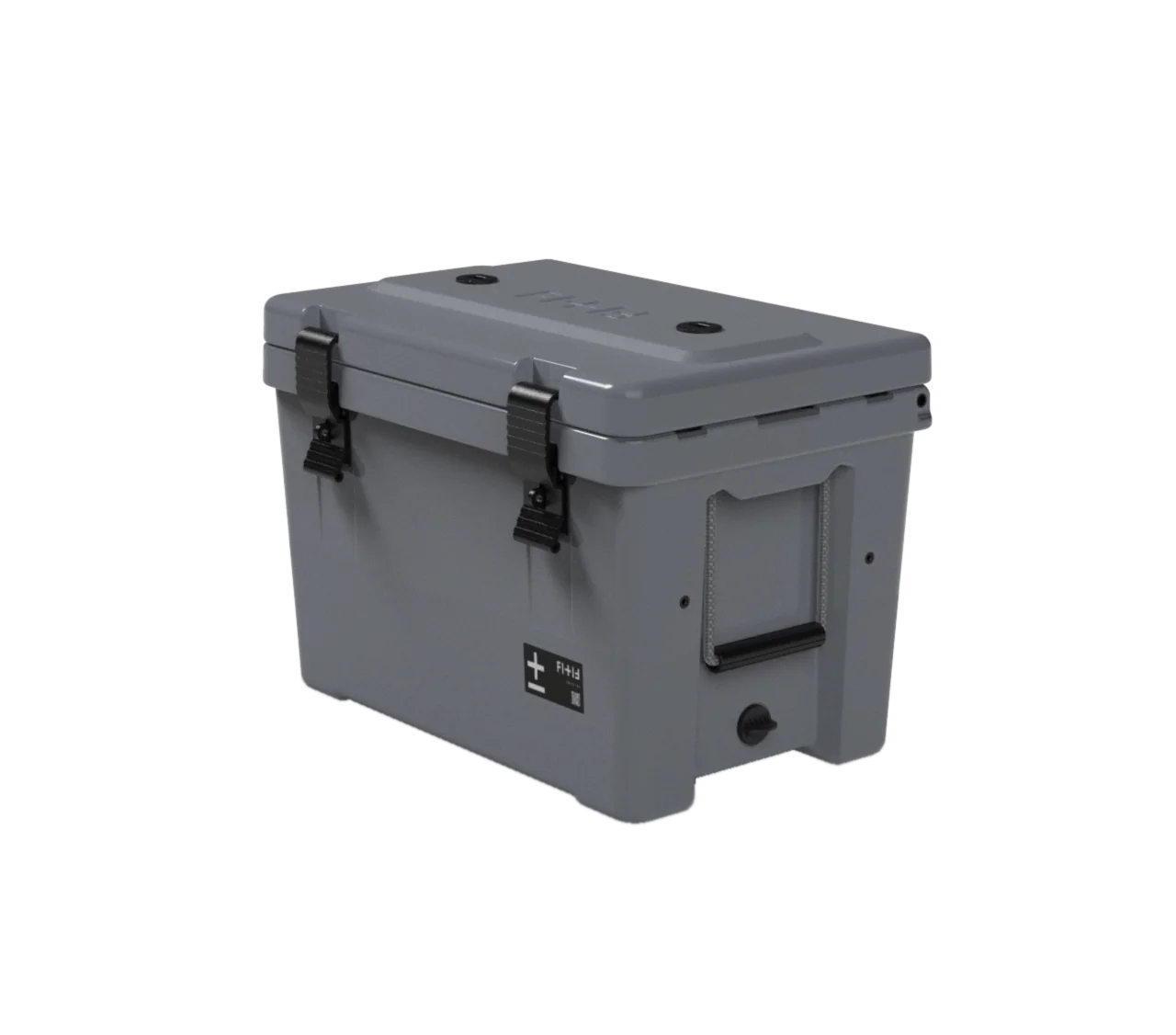
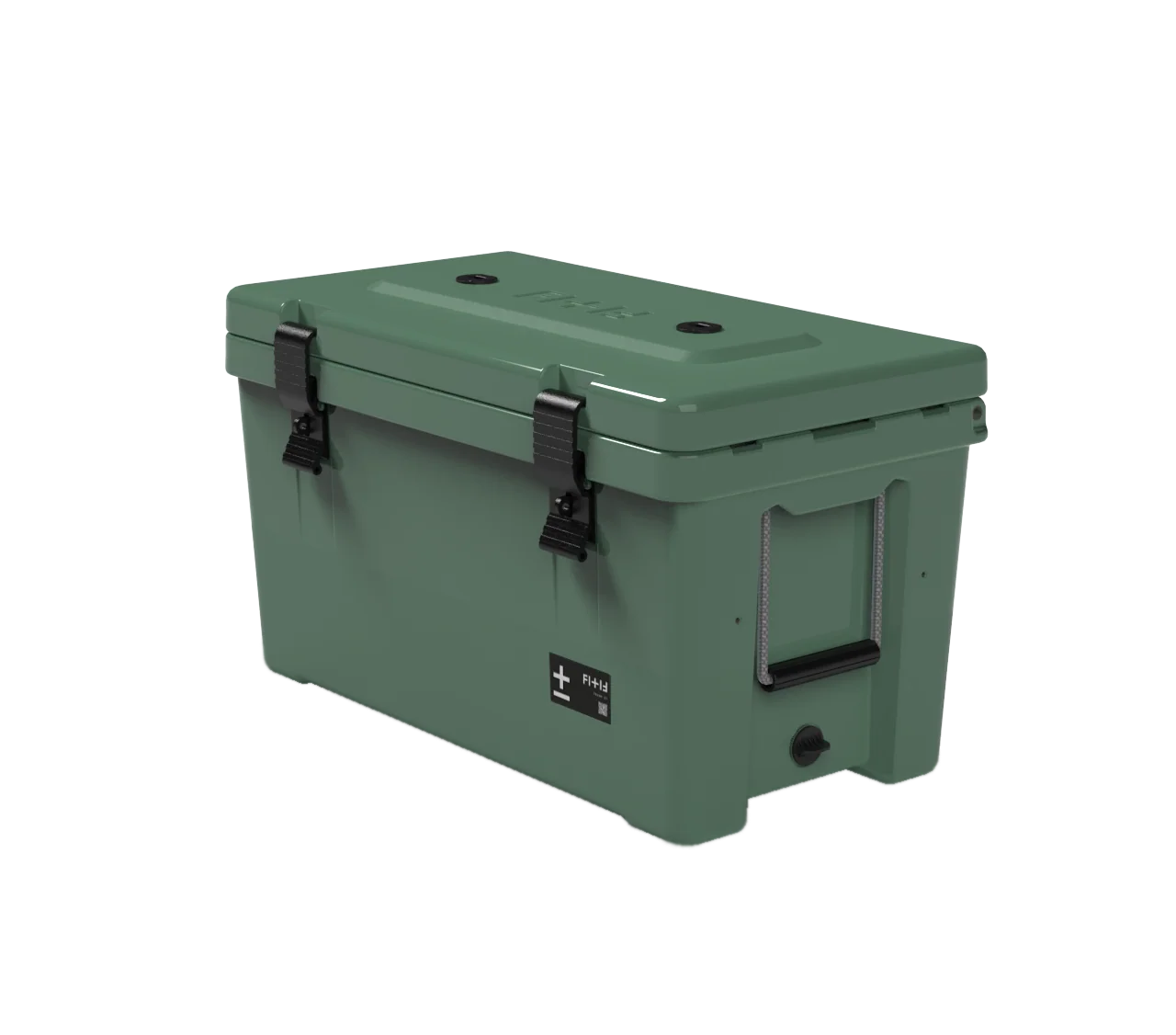
How rotomolding works
Polyethylene powder is loaded into a two-part steel mold. The mold rotates on two axes inside an oven so the melting polymer coats every internal surface evenly. After cooling, the result is one seamless shell with consistent wall thickness — including the corners, which is where thin-walled coolers fail first.
The cavity between inner and outer shell is then filled with pressure-injected polyurethane foam. Pressure injection eliminates voids: no air pockets, no thermal shortcuts.
Rotomolded vs injection-molded
Injection-molded coolers are cheap, light and fast to produce, but they are assembled from separate parts with thin walls and thin insulation. Expect hours to a day of ice and hinges that break.
Rotomolded coolers cost more and weigh more. In exchange you get days of ice, a body you can stand on, and hardware designed to be replaced rather than a cooler designed to be thrown away.
What FIXIF adds
The rotomolded body is the baseline, not the product. FIXIF adds the magnetic mounting system, FIXMODULAR™ interaction chambers, a seat-height lid across the range, FIXWATER™ clean-water certification and a 6-year warranty.
Questions
Does rotomolded mean bear-resistant?
It is the prerequisite, not the certification. The seamless shell and aluminium buckles resist casual wildlife intrusion; for grizzly country, padlock the buckle eyes.
Will UV degrade the plastic?
The polyethylene is UV-stabilised throughout the wall, not just at the surface, so colour and structure hold over years of outdoor storage.